
Trust erodes gradually, not suddenly. It happens through accumulating small moments: unclear decision announcements, rapid initiative changes, and unexplained priority shifts. From leadership’s perspective, these represent necessary adaptations. From employees’ viewpoint, they signal confusion.
What Teams Are Actually Looking For
Three key signals build trust: recognition that leadership understands team challenges and pressures; confidence in leadership capability through thoughtful, informed decisions; consistency between words and actions.
Where Trust Begins to Break Down
Trust deteriorates through everyday patterns: pursuing excessive simultaneous priorities; replacing unfinished initiatives with new strategies; inefficient systems that waste employee time. These patterns collectively undermine perceptions of leadership understanding, capability, and reliability.
Rebuilding Trust Through Leadership Behaviour
Recovery requires behavioural change, not messaging alone. Leaders strengthen trust by making decisive choices, maintaining consistency long enough for results, explaining decision rationale, and acknowledging mistakes. This reinforces team confidence and accelerates organisational progress.
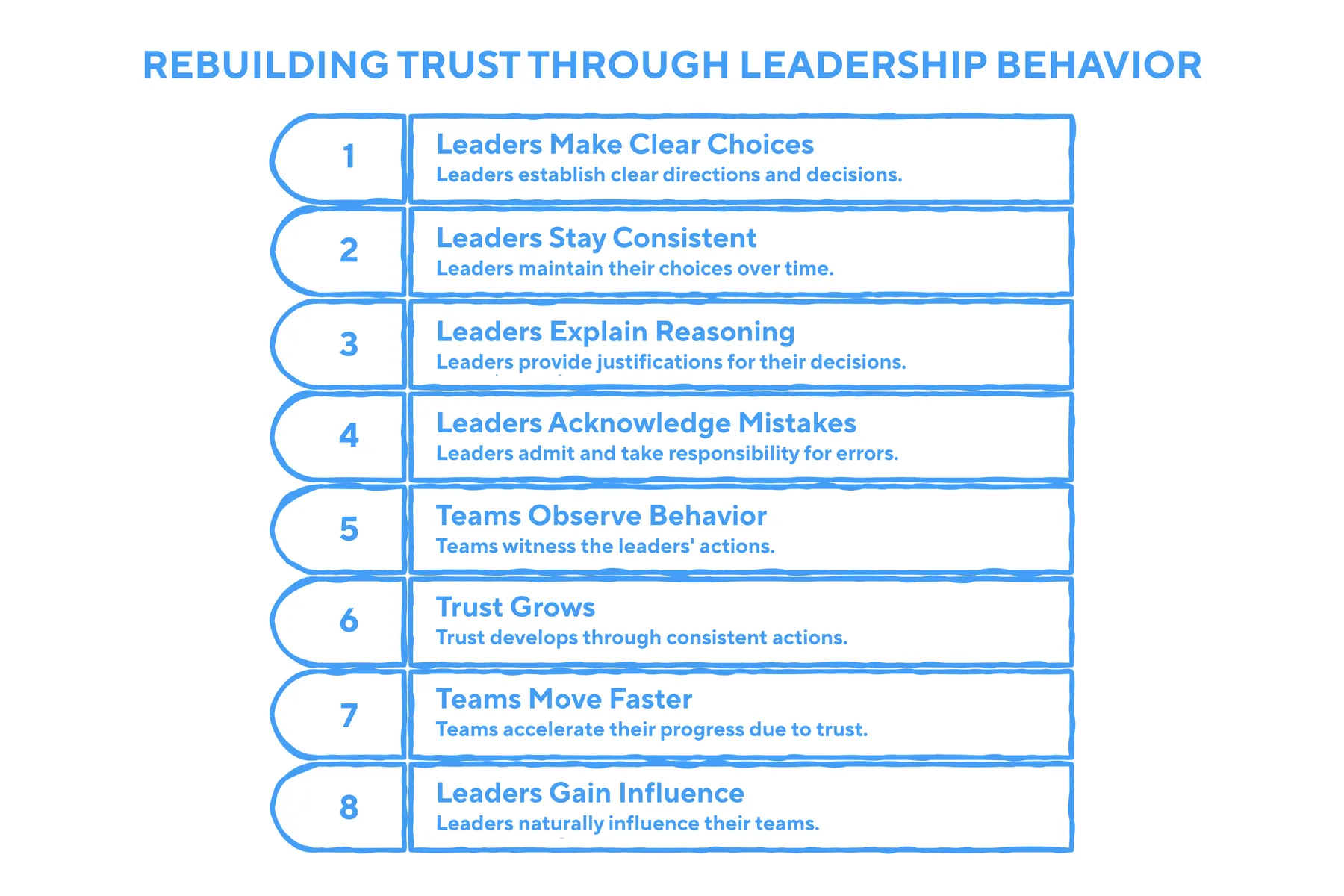
When signals remain consistent, teams follow naturally rather than requiring persuasion.