

Credibility is one of the most valuable forms of leadership capital — and one of the easiest to lose. Leaders don’t typically lose credibility through a single dramatic mistake. Instead, it erodes gradually through small behaviours that accumulate doubt: inconsistent decisions, shifting messages based on audience, or asking for trust while failing to demonstrate transparency.
Teams continuously interpret leadership actions. These interpretations shape whether people view a leader as worth following.
What Credibility Rests On
Credibility rests on two essential beliefs: people must believe a leader is capable of performing the job well, and they must trust that the leader’s judgement, values, and follow-through are dependable. When either belief weakens, credibility begins declining.
Credibility Is Built Through Daily Actions
Leaders often think credibility comes from vision, confidence, or major decisions. Actually, it develops through quiet, consistent behaviour. Teams observe how leaders communicate under pressure, whether priorities remain stable, whether decisions reflect stated values, and whether leaders listen and follow through.
Where Credibility Breaks Down
Priority Confusion
When everything becomes a priority, teams stop believing leadership has made genuine choices. Everyone stays busy — but people question whether real direction exists.
Constant Pivoting
Leaders attracted to the next initiative without sustained follow-through appear reactive rather than intentional. Teams hesitate committing when experience suggests direction will change.
Reliance on Effort Over Design
Expecting organisations to function through extra effort rather than sound design signals poor judgement. People begin questioning both systems and leadership decision-making.
Rebuilding Credibility
Many leaders respond to eroding credibility with more communication. But credibility isn’t restored through volume — it requires evidence. Leaders rebuild credibility when actions become trustworthy: making clearer choices, maintaining consistency, demonstrating decisions grounded in genuine understanding, listening before announcing, and aligning words with behaviour.
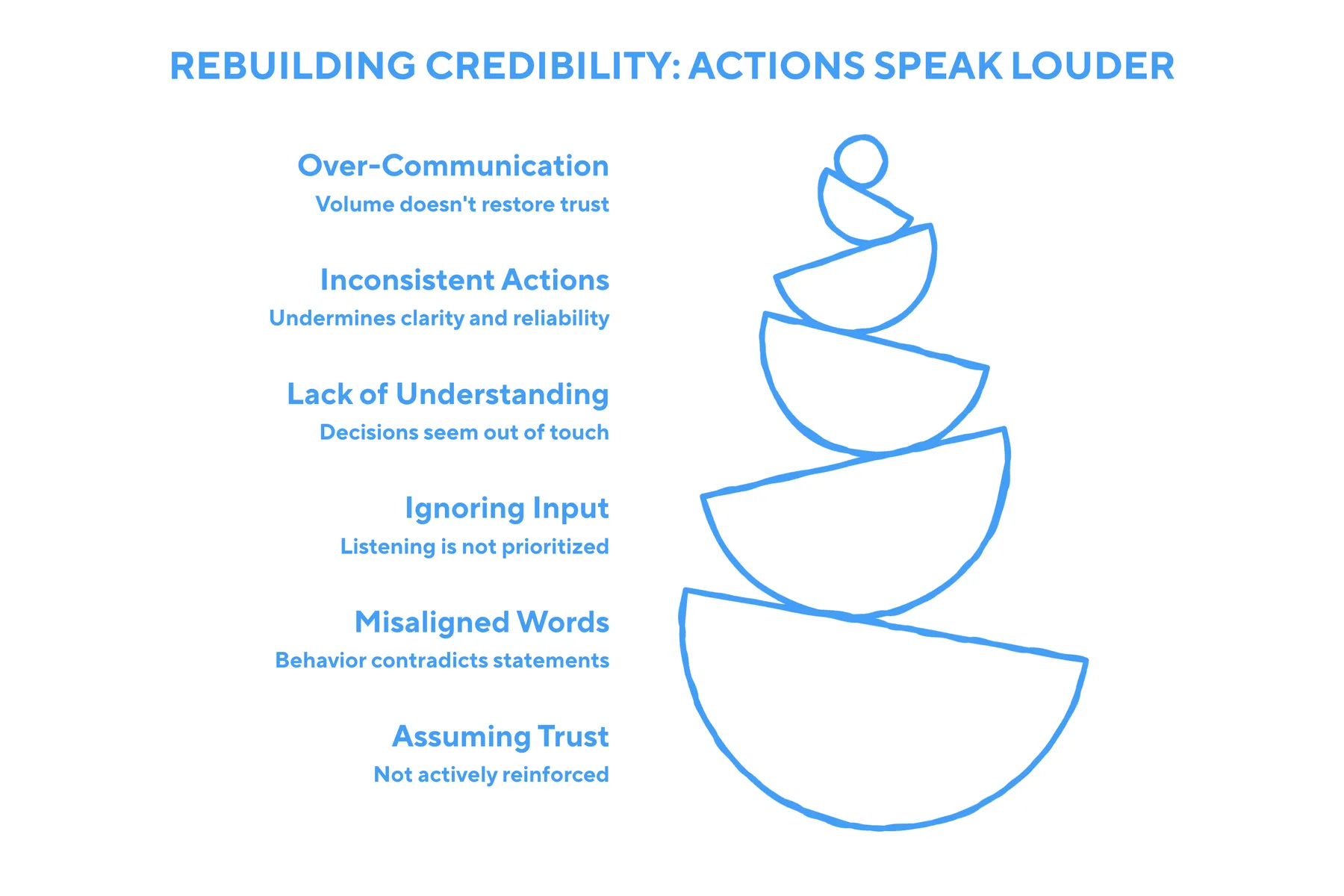
Credibility isn’t about perfection — it’s about believability. Belief develops when people observe that leadership thinks clearly, communicates honestly, and follows through with discipline.