
Rapid growth is exhilarating — a sign that what you’re offering is valued. But when organisations expand too fast without a clear plan, it can feel like riding a rocket with no way to steer. Suddenly, you’re juggling overworked staff, declining quality, and a growing list of frustrated stakeholders.
Many leaders find themselves overwhelmed by the demands of scaling up, reaching a critical point where growth turns from a blessing into a burden. But there’s good news: the Sigmoid Curve offers a proven way to manage this phase and maintain sustainable growth.
The Problem: Growing Too Quickly
Growing too quickly might sound like the best problem to have, but it brings hidden dangers. As an organisation expands, challenges stack up: overloading your team, losing control of quality, struggling to manage more moving parts. The systems that once worked beautifully start to crack under pressure.
Imagine this: your team is used to handling 10 projects at a time. Suddenly you’re taking on 30, and your small but effective team is swamped. Quality checks get skipped, projects are delayed, and unhappy stakeholders begin voicing frustration. That initial growth spurt turns into something that threatens your reputation.
The Sigmoid Curve
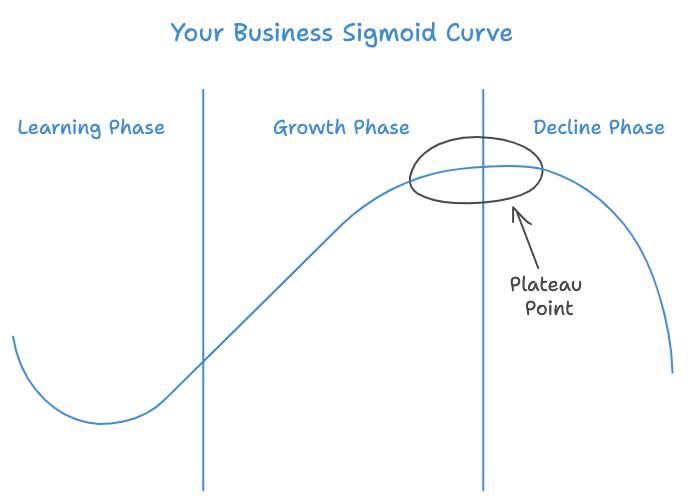
The Sigmoid Curve is a visual model illustrating the life cycle of any system — a business, a product, or a career. It starts with initial investment, followed by growth, then a plateau, and, if not managed, decline.
The critical insight: just when things are going well, before you hit that plateau, you need to begin innovating and evolving. This proactive step ensures your organisation doesn’t slide into decline. In practical terms, it means anticipating where your current systems and strategies will no longer be enough — and building new capabilities while you’re still on the upswing.
Practical Steps to Stabilise Growth
Set Realistic Growth Goals
One of the biggest risks is expanding faster than your organisation can handle. Assess your current capacity — how many projects or beneficiaries can your team handle without sacrificing quality? Use this as a baseline for incremental, sustainable goals.
Enhance Systems Early
As your organisation grows, processes that once worked become inefficient. Automate repetitive tasks, streamline operations, introduce standard operating procedures. The earlier you make these improvements, the smoother the transition.
Maintain Quality Through Strong Culture
Quality often suffers first when growth accelerates. Focus on building a team culture where people are motivated, supported, and aligned with values. Regular check-ins, feedback loops, and ensuring everyone has the resources they need will prevent burnout.
Use Data to Guide Decisions
Track key metrics — satisfaction, workloads, financial sustainability. Use these insights to adjust your growth strategy rather than guessing. If data shows declining quality, pause expansion and fix operational inefficiencies first.
Growth isn’t something to fear — it’s something to prepare for. The key is to recognise when it’s time to evolve, take proactive steps, and maintain a culture that supports quality and excellence.